
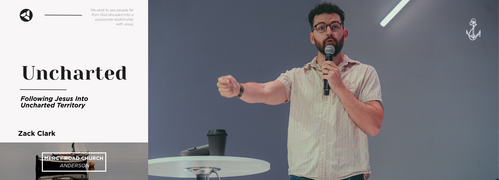
Following Jesus Into Uncharted Territory
When God Moves, We Move: Following Jesus Into the Uncharted
There is something deeply unsettling about following someone when you do not know where they are going. Most of us prefer a plan. We want the map, the itinerary, the projected outcome before we take a single step. But the life of faith has never worked that way, and Scripture makes no apologies for it.
The question at the heart of genuine discipleship is not "Where are we going?" It is "Is Jesus Lord?" And that question, as simple as it sounds, has a way of exposing exactly how much of our lives we have quietly placed off-limits to God.
Lordship Is Not a Partial Arrangement
When Jesus is called Lord, that word carries real weight. It means king. It means he has the final word. Not a coach who offers suggestions. Not an advisor you can choose to ignore. A king whose authority extends over every corner of your life, including the corners you would rather keep to yourself.
The honest truth is that many of us have drawn invisible lines. We have decided, sometimes without even realizing it, that Jesus is welcome in certain rooms of our lives but not others. Not the finances. Not the schedule. Not the relationship. Not the comfort. We call him Lord in our words while quietly reserving the right to override him in our decisions.
The real test of lordship is not how we answer on a Sunday morning. It is how we respond when following Jesus costs us something we did not want to give up.
God Sees, God Hears, God Moves
In Exodus 3, God speaks to Moses from a burning bush that is not consumed by the flames. He tells Moses something that should stop us in our tracks. He says that he has seen the suffering of his people, that he has heard their cries, and that he has come down to rescue them. Three movements: God sees, God hears, God acts.
But then comes the part that changes everything. God does not simply say, "I will rescue them." He says, in Exodus 3:10, that he is sending Moses to Pharaoh to bring the Israelites out of Egypt. God's compassion on a suffering people becomes Moses' commission. The rescue does not happen apart from a willing human being saying yes.
This is the consistent pattern of Scripture. When God decides to move toward people, he sends his people toward them. His heart for the hurting becomes a call to action for those who belong to him.
The Yes Comes Before the Provision
Moses did not feel ready. He asked who he was to stand before Pharaoh. He worried that no one would believe him. He admitted he was not a skilled speaker. He even asked God to send someone else. And God's response to every objection was not a list of Moses' qualifications. It was a promise: I will be with you.
God does not always give us what the assignment requires before we say yes. He asks for the yes first, and then he provides what is needed as we go. This is not a comfortable arrangement for people who prefer certainty. But it is the way of faith, and it has been from the beginning.
The promise God made to Moses is the same promise Jesus made to his disciples at the end of Matthew 28. After commissioning them to go and make disciples of all nations, he closes with the assurance that he is with them always, to the very end of the age. The mission changes in scope and crosses into a new covenant, but the structure is identical. Go. I will be with you.
Deliverance Is the Beginning, Not the End
When Israel crossed the Red Sea and watched Pharaoh's army swallowed by the waters, they celebrated. And they should have. It was a staggering act of deliverance. But the book was not over. In fact, it had barely begun.
Getting Israel out of Egypt took a moment. Getting Egypt out of Israel took forty years. God had delivered them in an instant, but forming them into his people was the long and often painful work of the wilderness. Deliverance was not the destination. It was the doorway into discipleship.
This reframes how we think about our own spiritual lives. Salvation is not the finish line. It is the starting point. Jesus did not rescue you so you could safely settle on the far side of the Red Sea and watch others from a comfortable distance. He saved you, he is forming you, and he intends to send you.
Disciples, Not Spectators
In John 20:21, the risen Jesus appears to his disciples and tells them that just as the Father sent him, he is sending them. The mission that began with Moses, continued through the prophets, and was fulfilled in Jesus now extends outward through everyone who follows him.
The Great Commission in Matthew 28 is not a call to build impressive institutions or fill large rooms. It is a call to make disciples, to baptize them and teach them to obey everything Jesus commanded. The multiplication of disciples is the strategy. It always has been.
This means the church was never meant to be a collection of spectators watching a small group of people do ministry on their behalf. It is meant to be a community of people being formed and sent, each one carrying the presence and message of Jesus into places and relationships that no pastor or platform will ever reach.
There are people in your life who would say no to a stranger and yes to you. There are conversations only you can have, doors only you can open, and trust only you can earn. The mission depends not on the few but on the many, each one saying yes to wherever Jesus leads.
The Map Has Run Out
The edge of the map is not a frightening place when you know who is walking with you. Uncharted territory is not a problem to be solved. It is an invitation to trust.
We already know enough to say yes. Jesus is Lord. He is moving. And he has promised to be with us every step of the way.
Stay close to him. Move when he moves. Go where he sends you. The rest is his to write.
The question at the heart of genuine discipleship is not "Where are we going?" It is "Is Jesus Lord?" And that question, as simple as it sounds, has a way of exposing exactly how much of our lives we have quietly placed off-limits to God.
Lordship Is Not a Partial Arrangement
When Jesus is called Lord, that word carries real weight. It means king. It means he has the final word. Not a coach who offers suggestions. Not an advisor you can choose to ignore. A king whose authority extends over every corner of your life, including the corners you would rather keep to yourself.
The honest truth is that many of us have drawn invisible lines. We have decided, sometimes without even realizing it, that Jesus is welcome in certain rooms of our lives but not others. Not the finances. Not the schedule. Not the relationship. Not the comfort. We call him Lord in our words while quietly reserving the right to override him in our decisions.
The real test of lordship is not how we answer on a Sunday morning. It is how we respond when following Jesus costs us something we did not want to give up.
God Sees, God Hears, God Moves
In Exodus 3, God speaks to Moses from a burning bush that is not consumed by the flames. He tells Moses something that should stop us in our tracks. He says that he has seen the suffering of his people, that he has heard their cries, and that he has come down to rescue them. Three movements: God sees, God hears, God acts.
But then comes the part that changes everything. God does not simply say, "I will rescue them." He says, in Exodus 3:10, that he is sending Moses to Pharaoh to bring the Israelites out of Egypt. God's compassion on a suffering people becomes Moses' commission. The rescue does not happen apart from a willing human being saying yes.
This is the consistent pattern of Scripture. When God decides to move toward people, he sends his people toward them. His heart for the hurting becomes a call to action for those who belong to him.
The Yes Comes Before the Provision
Moses did not feel ready. He asked who he was to stand before Pharaoh. He worried that no one would believe him. He admitted he was not a skilled speaker. He even asked God to send someone else. And God's response to every objection was not a list of Moses' qualifications. It was a promise: I will be with you.
God does not always give us what the assignment requires before we say yes. He asks for the yes first, and then he provides what is needed as we go. This is not a comfortable arrangement for people who prefer certainty. But it is the way of faith, and it has been from the beginning.
The promise God made to Moses is the same promise Jesus made to his disciples at the end of Matthew 28. After commissioning them to go and make disciples of all nations, he closes with the assurance that he is with them always, to the very end of the age. The mission changes in scope and crosses into a new covenant, but the structure is identical. Go. I will be with you.
Deliverance Is the Beginning, Not the End
When Israel crossed the Red Sea and watched Pharaoh's army swallowed by the waters, they celebrated. And they should have. It was a staggering act of deliverance. But the book was not over. In fact, it had barely begun.
Getting Israel out of Egypt took a moment. Getting Egypt out of Israel took forty years. God had delivered them in an instant, but forming them into his people was the long and often painful work of the wilderness. Deliverance was not the destination. It was the doorway into discipleship.
This reframes how we think about our own spiritual lives. Salvation is not the finish line. It is the starting point. Jesus did not rescue you so you could safely settle on the far side of the Red Sea and watch others from a comfortable distance. He saved you, he is forming you, and he intends to send you.
Disciples, Not Spectators
In John 20:21, the risen Jesus appears to his disciples and tells them that just as the Father sent him, he is sending them. The mission that began with Moses, continued through the prophets, and was fulfilled in Jesus now extends outward through everyone who follows him.
The Great Commission in Matthew 28 is not a call to build impressive institutions or fill large rooms. It is a call to make disciples, to baptize them and teach them to obey everything Jesus commanded. The multiplication of disciples is the strategy. It always has been.
This means the church was never meant to be a collection of spectators watching a small group of people do ministry on their behalf. It is meant to be a community of people being formed and sent, each one carrying the presence and message of Jesus into places and relationships that no pastor or platform will ever reach.
There are people in your life who would say no to a stranger and yes to you. There are conversations only you can have, doors only you can open, and trust only you can earn. The mission depends not on the few but on the many, each one saying yes to wherever Jesus leads.
The Map Has Run Out
The edge of the map is not a frightening place when you know who is walking with you. Uncharted territory is not a problem to be solved. It is an invitation to trust.
We already know enough to say yes. Jesus is Lord. He is moving. And he has promised to be with us every step of the way.
Stay close to him. Move when he moves. Go where he sends you. The rest is his to write.
Into The Deep
Aug 30, 2026 • Zack Clark
Uncharted: Zack Clark
Aug 29, 2026
Better Together
Mark Johnson
Uncharted: Whitney Johnson
Aug 22, 2026
Trust the Process
Aug 16, 2026 • Mark Johnson
Uncharted: Ryan Jackson
Aug 15, 2026
Take the Leap
Aug 9, 2026 • Mark Johnson
Uncharted: Mark Johnson
Aug 8, 2026
No media was found.
Posted in Uncharted
Recent
Archive
2026
August
September
No Comments