
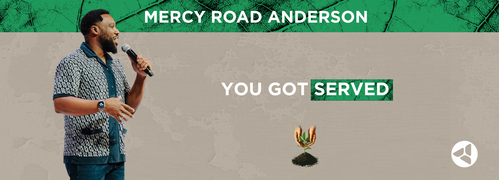
You Got Served
The Power of Service: Unlocking a Generous Life
There's something transformative that happens when we shift our perspective from accumulation to dissemination. True generosity isn't measured by the size of our bank accounts or the abundance of our possessions—it's revealed in the posture of our hearts and the willingness of our hands to serve.
Beyond the Balance Sheet
Many of us believe we need to reach a certain financial threshold before we can be generous. We think, "Once I make more money, then I'll give. Once I have margin, then I'll serve." But this mindset misses the fundamental truth about generosity: it's not about what leaves your hand; it's about who rules your heart.
The love of money—not money itself—becomes dangerous when it takes the throne of our hearts. When financial security becomes our ruler, we'll compromise relationships, integrity, and values to protect it. We'll lie, cheat, and prioritize accumulation over connection. But when God rules our hearts, money becomes a tool for kingdom advancement rather than a treasure to hoard.
Creating Margin Through Intentionality
For those who genuinely want to be generous but feel financially constrained, there's a practical framework that can unlock margin: the 10-10-80 principle.
Here's how it works: With every paycheck, allocate the first 10% to giving—investing in kingdom advancement and the work of God in the world. The second 10% goes to savings, creating a buffer for unexpected expenses and future needs. The remaining 80% is what you live on.
Let's break this down with simple math. If you bring home $1,000 monthly, you'd give $100, save $100, and live on $800. This means your rent, groceries, utilities, transportation, and all other expenses need to fit within that $800.
This principle forces an important distinction: just because you can pay for something doesn't mean you can afford it. That $1,000 apartment might be within reach if you spend your entire paycheck, but you can't truly afford it when you're called to be a faithful steward of all God has given you.
If you don't assign every dollar a purpose, money will tell you where it went rather than going where you intended. Intentionality creates margin. Margin creates opportunity. Opportunity creates generosity.
The Night Before the Cross
There's a powerful scene in John 13 that redefines everything we think we know about power, leadership, and service. On the night before His crucifixion, Jesus didn't retreat to a throne. Instead, He picked up a towel.
Picture this: Jesus walks into someone else's home, takes their towel, dips it in their basin of water, and begins washing His disciples' feet. It wasn't His house. It wasn't His towel. It wasn't His water. But it was absolutely His mission.
In that culture, foot washing was customary hospitality. People wore sandals and walked on dusty, unpaved roads. When entering a home, feet needed washing. But typically, this task fell to servants—the lowest members of the household.
Yet here was the Master, the Teacher, the Lord of all creation, kneeling before His disciples—including Judas, who would betray Him—and washing the dirt from their feet.
Jesus was redefining power as humility and leadership as service. He was demonstrating that true power doesn't push people down; it lifts them up. Real authority doesn't demand to be served; it looks for opportunities to serve.
Understanding What Was Washed
Jesus didn't create the mess on His disciples' feet. He didn't make them walk where they walked. He didn't generate the dirt and dust. But He absolutely cleaned it up.
This physical act was a preview of what would happen on the cross. Just as Jesus washed feet He didn't dirty, He would soon wash away sins He didn't commit. We made the mistakes. We told the lies. We chose the shortcuts and compromises. We created the mess. Yet Jesus doesn't condemn us—He cleanses us.
When we truly understand who served our mess, it changes everything about how we live.
The Original Equipment of the Messiah
After washing their feet, Jesus asked His disciples a crucial question: "Do you understand what I have done for you?"
Then He made it clear: "I have set you an example that you should do as I have done for you."
Serving isn't optional for followers of Jesus—it's the original equipment of the Messiah. When you purchase a car with original equipment manufacturer (OEM) parts, you're getting exactly what the manufacturer designed. Those parts are covered by warranty. Knockoff parts might look similar and function adequately, but they lack the manufacturer's guarantee.
Serving is the OEM of Christianity. If you call yourself a follower of Jesus but aren't serving anything beyond your own agenda, you might be operating with knockoff parts—looking the part but lacking the warranty of authentic discipleship.
Being a Christian means picking up your cross and following Jesus. It means serving like Jesus, walking like Jesus, talking like Jesus. Serving is the ground-level expression of faith—showing up, moving chairs, sweeping floors, visiting hospitals, praying for strangers, being available for God to use you in aisle six of the grocery store.
Securing Your Future Through Service
Here's the promise that often gets overlooked: "Now that you know these things, you will be blessed if you do them."
Serving isn't just about meeting needs in the present—it's God's strategy for securing your future. When you serve with your time, treasure, and talent, you unlock blessings that transcend immediate circumstances.
Think about the people who invested in you when you couldn't repay them. The Sunday school teachers who woke up early to prepare lessons. The mentors who took you places and exposed you to new experiences. The individuals who prayed for you, believed in you, and served you when you had nothing to offer in return.
Their service didn't just impact their present—it shaped your future. And your service today is shaping someone else's tomorrow.
The Call to Serve
Generosity and service are inseparable. You cannot live a truly generous life without serving. And when you serve, you become less selfish, less stingy, and more aligned with the heart of God.
The enemy will attack when you commit to serving because he knows what's being unlocked in your future. But don't let resistance deter you. Every act of service—whether grand or simple—participates in kingdom advancement.
So the question isn't whether you have enough to be generous. The question is whether you understand who served your mess. When that truth settles deep in your soul, serving becomes not a burden but a privilege—not an obligation but an overflow.
Your generous life is waiting. It starts with a towel, a basin, and a willingness to kneel.
Beyond the Balance Sheet
Many of us believe we need to reach a certain financial threshold before we can be generous. We think, "Once I make more money, then I'll give. Once I have margin, then I'll serve." But this mindset misses the fundamental truth about generosity: it's not about what leaves your hand; it's about who rules your heart.
The love of money—not money itself—becomes dangerous when it takes the throne of our hearts. When financial security becomes our ruler, we'll compromise relationships, integrity, and values to protect it. We'll lie, cheat, and prioritize accumulation over connection. But when God rules our hearts, money becomes a tool for kingdom advancement rather than a treasure to hoard.
Creating Margin Through Intentionality
For those who genuinely want to be generous but feel financially constrained, there's a practical framework that can unlock margin: the 10-10-80 principle.
Here's how it works: With every paycheck, allocate the first 10% to giving—investing in kingdom advancement and the work of God in the world. The second 10% goes to savings, creating a buffer for unexpected expenses and future needs. The remaining 80% is what you live on.
Let's break this down with simple math. If you bring home $1,000 monthly, you'd give $100, save $100, and live on $800. This means your rent, groceries, utilities, transportation, and all other expenses need to fit within that $800.
This principle forces an important distinction: just because you can pay for something doesn't mean you can afford it. That $1,000 apartment might be within reach if you spend your entire paycheck, but you can't truly afford it when you're called to be a faithful steward of all God has given you.
If you don't assign every dollar a purpose, money will tell you where it went rather than going where you intended. Intentionality creates margin. Margin creates opportunity. Opportunity creates generosity.
The Night Before the Cross
There's a powerful scene in John 13 that redefines everything we think we know about power, leadership, and service. On the night before His crucifixion, Jesus didn't retreat to a throne. Instead, He picked up a towel.
Picture this: Jesus walks into someone else's home, takes their towel, dips it in their basin of water, and begins washing His disciples' feet. It wasn't His house. It wasn't His towel. It wasn't His water. But it was absolutely His mission.
In that culture, foot washing was customary hospitality. People wore sandals and walked on dusty, unpaved roads. When entering a home, feet needed washing. But typically, this task fell to servants—the lowest members of the household.
Yet here was the Master, the Teacher, the Lord of all creation, kneeling before His disciples—including Judas, who would betray Him—and washing the dirt from their feet.
Jesus was redefining power as humility and leadership as service. He was demonstrating that true power doesn't push people down; it lifts them up. Real authority doesn't demand to be served; it looks for opportunities to serve.
Understanding What Was Washed
Jesus didn't create the mess on His disciples' feet. He didn't make them walk where they walked. He didn't generate the dirt and dust. But He absolutely cleaned it up.
This physical act was a preview of what would happen on the cross. Just as Jesus washed feet He didn't dirty, He would soon wash away sins He didn't commit. We made the mistakes. We told the lies. We chose the shortcuts and compromises. We created the mess. Yet Jesus doesn't condemn us—He cleanses us.
When we truly understand who served our mess, it changes everything about how we live.
The Original Equipment of the Messiah
After washing their feet, Jesus asked His disciples a crucial question: "Do you understand what I have done for you?"
Then He made it clear: "I have set you an example that you should do as I have done for you."
Serving isn't optional for followers of Jesus—it's the original equipment of the Messiah. When you purchase a car with original equipment manufacturer (OEM) parts, you're getting exactly what the manufacturer designed. Those parts are covered by warranty. Knockoff parts might look similar and function adequately, but they lack the manufacturer's guarantee.
Serving is the OEM of Christianity. If you call yourself a follower of Jesus but aren't serving anything beyond your own agenda, you might be operating with knockoff parts—looking the part but lacking the warranty of authentic discipleship.
Being a Christian means picking up your cross and following Jesus. It means serving like Jesus, walking like Jesus, talking like Jesus. Serving is the ground-level expression of faith—showing up, moving chairs, sweeping floors, visiting hospitals, praying for strangers, being available for God to use you in aisle six of the grocery store.
Securing Your Future Through Service
Here's the promise that often gets overlooked: "Now that you know these things, you will be blessed if you do them."
Serving isn't just about meeting needs in the present—it's God's strategy for securing your future. When you serve with your time, treasure, and talent, you unlock blessings that transcend immediate circumstances.
Think about the people who invested in you when you couldn't repay them. The Sunday school teachers who woke up early to prepare lessons. The mentors who took you places and exposed you to new experiences. The individuals who prayed for you, believed in you, and served you when you had nothing to offer in return.
Their service didn't just impact their present—it shaped your future. And your service today is shaping someone else's tomorrow.
The Call to Serve
Generosity and service are inseparable. You cannot live a truly generous life without serving. And when you serve, you become less selfish, less stingy, and more aligned with the heart of God.
The enemy will attack when you commit to serving because he knows what's being unlocked in your future. But don't let resistance deter you. Every act of service—whether grand or simple—participates in kingdom advancement.
So the question isn't whether you have enough to be generous. The question is whether you understand who served your mess. When that truth settles deep in your soul, serving becomes not a burden but a privilege—not an obligation but an overflow.
Your generous life is waiting. It starts with a towel, a basin, and a willingness to kneel.
Posted in Generous Life
Recent
Archive
2026
August
September
No Comments