
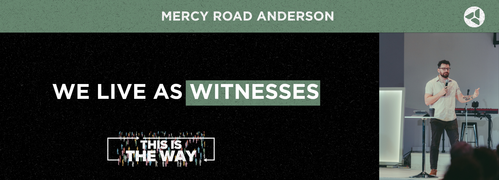
We Live As Witnesses
The Way of Jesus: Moving Toward Pain, Not Away From It
There's a profound difference between admiring someone and actually following them. We can appreciate beautiful teachings from a distance, nod along with inspiring words, and even call ourselves believers, all while maintaining a safe separation from the messy reality of what those beliefs demand.
Nowhere does this gap become more visible than in how we respond to suffering.
The Man Everyone Learned Not to See
In John chapter 9, we encounter a story that exposes our tendency to categorize rather than see people. A man sits beside a busy road, blind from birth, begging for help. Day after day, crowds pass by—religious festival-goers, temple attendees, devout believers—all walking past this suffering human being.
When Jesus' disciples finally notice him, their question reveals everything: "Why was this man born blind? Was it because of his own sins or his parents' sins?"
They don't ask how they can help. They ask why people like this exist at all.
The disciples saw a category: disabled, beggar, unproductive, a drain on society. They assumed he was paying for someone's spiritual failure. To them, he wasn't even worth a name—just a theological puzzle to solve.
But Jesus saw a person.
"It was not because of his sins or his parents' sins," Jesus answered. "This happened so the power of God could be seen in him."
The Healing That Required Touch
Here's what's remarkable: Jesus didn't need to touch this man to heal him. He had healed people from a distance before. He could have spoken a word and kept walking. But instead, he stopped. He made mud with his own saliva. He knelt down and spread it over the blind man's eyes with his own hands.
Jesus chose proximity over convenience.
He stepped toward suffering instead of away from it. And this simple act infuriated the religious leaders, who cared more about Sabbath rule-breaking than the miracle of restoration happening before their eyes.
The pattern is undeniable: it's impossible to consistently follow a Savior who moves toward vulnerable people when we constantly move away from them.
When Suffering Stops Being Invisible
Sometimes suffering stays invisible because we've learned not to see it. We avert our eyes. We change lanes. We say "someone should do something about that" while keeping ourselves comfortably distant from the actual doing.
But once Jesus changes how you see people, you can't unsee them anymore.
Consider the foster care crisis happening in communities across America. In Madison County, Indiana alone, there are over 500 children in foster care but only about 40 licensed foster homes. That means 47% of kids removed from their homes go to sleep in another county that night—losing not just their parents, but their teachers, friends, neighborhoods, and everything familiar.
These aren't statistics. They're children with names, favorite colors, bedtime routines, and fears about what tomorrow holds.
The need isn't somewhere far away. It's eight minutes from your house. It's at the intersection you drive through every day. It's in the grocery store where you shop.
The Goal You Might Not Expect
Here's what many people misunderstand about foster care: the goal isn't rescuing kids from bad parents. The goal is reunification whenever possible—keeping kids safe while parents heal and get healthy enough to bring them home again.
This reframes everything. Instead of heroes swooping in to save the day, we become supporters of families in crisis. We walk alongside struggling parents, teaching budgeting, supporting recovery, helping with anger management, showing them how to ask for help.
It's way harder than rescue fantasies. It's also way more important.
Because the way of Jesus doesn't just love vulnerable kids—it also loves their struggling parents.
The Village It Takes
Meaningful change requires more than individual heroics. It takes foster parents, licensing workers, respite care homes, case workers, and communities surrounding both the foster family and the biological family.
It takes people willing to bring meals without being asked. People who notice the lawn needs mowing and just do it. People who say "I'll watch the kids—go take a nap" instead of "let me know if you need anything."
Anyone can show up for a minute. The way of Jesus teaches us to stay.
What if churches became known not for one-time charity events, but for long obedience? For staying power? For being the people who are still there when the cameras leave and the initial excitement fades?
You Don't Have to Do Everything
The beautiful truth is that you don't have to become a foster parent to make a difference in this crisis. You can:
The question isn't whether you can do everything. It's whether you're willing to do something.
The Testimony of the Healed
After Jesus healed the blind man, religious leaders interrogated him, trying to poke holes in his story. His response was perfect: "I don't know whether he's a sinner, but I know this: I was blind and now I can see."
He didn't have all the theological answers. But he was a witness to what Jesus could do.
The way of Jesus turns healed people into witnesses.
Every person who has encountered Jesus and been changed has a story to tell. Not a perfect story. Not a story with all the answers. But a testimony: I was one way, and then I met Jesus, and now I'm completely different.
The Blindness We Refuse to Admit
Jesus said something striking to the Pharisees: "I entered this world to render judgment—to give sight to the blind and to show those who think they can see that they are blind."
The blind man was healed because he knew he was blind. The Pharisees remained blind because they refused to admit it.
If we pretend we can already see clearly—that we have nothing to learn, no blind spots to address, no comfortable assumptions to challenge—we may be the only blind people left when Jesus starts working.
The Mission Before the Healing
Jesus could have healed the blind man instantly, right where he sat. Instead, he said, "Go wash yourself in the pool of Siloam."
The man had to move. Still blind, he had to find a guide and make his way to the pool. He had to trust Jesus enough to get up and go before he received his healing.
Following Jesus requires movement, not just belief. You may get assigned a mission before you get healed. In fact, you definitely will.
Jesus' last words to his disciples weren't "sit and wait for everything to get better." They were: "You will receive power when the Holy Spirit comes upon you. And you will be my witnesses."
This Is the Way
The way of Jesus sees people that others walk past.
The way of Jesus moves toward pain instead of away from it.
The way of Jesus turns healed people into witnesses.
The only question is whether we're really willing to make Jesus the center of it all—not just in our words, but in our movement toward the suffering happening right in front of us.
The blind man had a choice: stay seated with mud on his eyes, or get up and go.
What will you choose?
Nowhere does this gap become more visible than in how we respond to suffering.
The Man Everyone Learned Not to See
In John chapter 9, we encounter a story that exposes our tendency to categorize rather than see people. A man sits beside a busy road, blind from birth, begging for help. Day after day, crowds pass by—religious festival-goers, temple attendees, devout believers—all walking past this suffering human being.
When Jesus' disciples finally notice him, their question reveals everything: "Why was this man born blind? Was it because of his own sins or his parents' sins?"
They don't ask how they can help. They ask why people like this exist at all.
The disciples saw a category: disabled, beggar, unproductive, a drain on society. They assumed he was paying for someone's spiritual failure. To them, he wasn't even worth a name—just a theological puzzle to solve.
But Jesus saw a person.
"It was not because of his sins or his parents' sins," Jesus answered. "This happened so the power of God could be seen in him."
The Healing That Required Touch
Here's what's remarkable: Jesus didn't need to touch this man to heal him. He had healed people from a distance before. He could have spoken a word and kept walking. But instead, he stopped. He made mud with his own saliva. He knelt down and spread it over the blind man's eyes with his own hands.
Jesus chose proximity over convenience.
He stepped toward suffering instead of away from it. And this simple act infuriated the religious leaders, who cared more about Sabbath rule-breaking than the miracle of restoration happening before their eyes.
The pattern is undeniable: it's impossible to consistently follow a Savior who moves toward vulnerable people when we constantly move away from them.
When Suffering Stops Being Invisible
Sometimes suffering stays invisible because we've learned not to see it. We avert our eyes. We change lanes. We say "someone should do something about that" while keeping ourselves comfortably distant from the actual doing.
But once Jesus changes how you see people, you can't unsee them anymore.
Consider the foster care crisis happening in communities across America. In Madison County, Indiana alone, there are over 500 children in foster care but only about 40 licensed foster homes. That means 47% of kids removed from their homes go to sleep in another county that night—losing not just their parents, but their teachers, friends, neighborhoods, and everything familiar.
These aren't statistics. They're children with names, favorite colors, bedtime routines, and fears about what tomorrow holds.
The need isn't somewhere far away. It's eight minutes from your house. It's at the intersection you drive through every day. It's in the grocery store where you shop.
The Goal You Might Not Expect
Here's what many people misunderstand about foster care: the goal isn't rescuing kids from bad parents. The goal is reunification whenever possible—keeping kids safe while parents heal and get healthy enough to bring them home again.
This reframes everything. Instead of heroes swooping in to save the day, we become supporters of families in crisis. We walk alongside struggling parents, teaching budgeting, supporting recovery, helping with anger management, showing them how to ask for help.
It's way harder than rescue fantasies. It's also way more important.
Because the way of Jesus doesn't just love vulnerable kids—it also loves their struggling parents.
The Village It Takes
Meaningful change requires more than individual heroics. It takes foster parents, licensing workers, respite care homes, case workers, and communities surrounding both the foster family and the biological family.
It takes people willing to bring meals without being asked. People who notice the lawn needs mowing and just do it. People who say "I'll watch the kids—go take a nap" instead of "let me know if you need anything."
Anyone can show up for a minute. The way of Jesus teaches us to stay.
What if churches became known not for one-time charity events, but for long obedience? For staying power? For being the people who are still there when the cameras leave and the initial excitement fades?
You Don't Have to Do Everything
The beautiful truth is that you don't have to become a foster parent to make a difference in this crisis. You can:
- Join a care community that supports one foster family with practical help
- Provide a bed frame or groceries that keeps a family together
- Become a CASA volunteer advocating for kids in court
- Offer respite care or babysitting
- Use your skills to help families in crisis
The question isn't whether you can do everything. It's whether you're willing to do something.
The Testimony of the Healed
After Jesus healed the blind man, religious leaders interrogated him, trying to poke holes in his story. His response was perfect: "I don't know whether he's a sinner, but I know this: I was blind and now I can see."
He didn't have all the theological answers. But he was a witness to what Jesus could do.
The way of Jesus turns healed people into witnesses.
Every person who has encountered Jesus and been changed has a story to tell. Not a perfect story. Not a story with all the answers. But a testimony: I was one way, and then I met Jesus, and now I'm completely different.
The Blindness We Refuse to Admit
Jesus said something striking to the Pharisees: "I entered this world to render judgment—to give sight to the blind and to show those who think they can see that they are blind."
The blind man was healed because he knew he was blind. The Pharisees remained blind because they refused to admit it.
If we pretend we can already see clearly—that we have nothing to learn, no blind spots to address, no comfortable assumptions to challenge—we may be the only blind people left when Jesus starts working.
The Mission Before the Healing
Jesus could have healed the blind man instantly, right where he sat. Instead, he said, "Go wash yourself in the pool of Siloam."
The man had to move. Still blind, he had to find a guide and make his way to the pool. He had to trust Jesus enough to get up and go before he received his healing.
Following Jesus requires movement, not just belief. You may get assigned a mission before you get healed. In fact, you definitely will.
Jesus' last words to his disciples weren't "sit and wait for everything to get better." They were: "You will receive power when the Holy Spirit comes upon you. And you will be my witnesses."
This Is the Way
The way of Jesus sees people that others walk past.
The way of Jesus moves toward pain instead of away from it.
The way of Jesus turns healed people into witnesses.
The only question is whether we're really willing to make Jesus the center of it all—not just in our words, but in our movement toward the suffering happening right in front of us.
The blind man had a choice: stay seated with mud on his eyes, or get up and go.
What will you choose?
Posted in This is The Way
Recent
Archive
2026
August
September
No Comments