
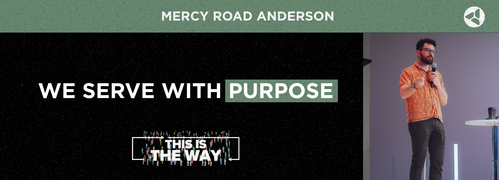
We Serve With Purpose
The Race to the Bottom: Discovering True Greatness Through Service
There's a profound paradox at the heart of Christianity that turns everything our culture teaches us completely upside down. While the world races toward the top—chasing status, power, and recognition—the kingdom of God operates on an entirely different principle. It's a race to the bottom.
This isn't a race of defeat or diminishment. It's a race toward the very heart of what it means to follow Jesus.
The Question That Changes Everything
We live in a consumer culture. Everything around us is designed for our comfort, our convenience, our on-demand gratification. Streaming services queue up the next episode before we can even decide if we want to keep watching. Social media feeds never end, always offering just one more scroll. Restaurants deliver to our doors. Products aren't made to be maintained—they're made to be used and discarded.
This mindset seeps into every area of life, including how we approach faith. We attend church services asking, "Did I like the worship style? Was the sermon entertaining? Did I feel fed?" We evaluate our spiritual experience the same way we rate a restaurant on our phone.
But here's the challenging truth: Jesus never invited people to consume the kingdom. He invited them to participate in it.
Christianity is fundamentally about participation, not consumption. And this isn't just a nice idea—it's modeled in the life of Jesus himself.
The Disciples' Power Grab
In Mark 10, we find an almost comical scene. James and John, two of Jesus' closest friends, pull him aside with a request. They want the best seats in the kingdom—the positions of honor right next to Jesus when he establishes his throne. They're essentially asking to be vice president and secretary of state in the new administration.
Jesus responds by telling them they don't understand what they're asking. The path to those positions goes through incredible suffering. Are they willing to walk that road?
"Oh yes, we're able," they confidently reply.
Jesus acknowledges they will indeed suffer, but explains that those positions aren't his to grant. God has already prepared them for specific people.
Here's where it gets interesting: the other ten disciples hear about this conversation and become furious. They're indignant—not because James and John asked for special treatment, but because they wanted those positions too. Soon all twelve are bickering about who among them is the greatest.
Jesus gathers them together and delivers a message that reverberates through the centuries: "You know that the rulers in this world lord it over their people and officials flaunt their authority over those under them. But among you, it will be different. Whoever wants to be a leader among you must be your servant, and whoever wants to be first among you must be the slave of everyone else."
Then comes the statement that should fundamentally reshape how we understand greatness: "For even the Son of Man came not to be served, but to serve others and to give his life as a ransom for many."
The Uncomfortable Question
If Jesus—the King of Kings, the Savior of the world, the one who deserved all glory—came not to be served but to serve, what makes us think we get to come to church to be served rather than to serve?
It's a spicy question, especially early on a Sunday morning. But it cuts to the heart of the matter.
The King of Kings wrapped a towel around his waist. The Savior of the world washed feet like a servant. The one who deserved glory chose sacrifice. The world races for status; Jesus raced toward sacrifice. The world races for power; Jesus raced toward the powerless.
The kingdom of God is a race to the bottom because that's where Jesus went.
Why Serving Transforms You
Here's the beautiful truth that many miss: serving isn't just about helping other people. It changes you.
Serving isn't penance or a way to earn points with God. It's participation. It's progress. Because serving is something God does in you, not just through you.
In Ephesians 4, Paul explains that church leaders—apostles, prophets, evangelists, pastors, and teachers—are given as gifts to the church. But their job isn't to do all the ministry work. Their responsibility is "to equip God's people to do his work and build up the church, the body of Christ."
Why? "This will continue until we all come to such unity in our faith and knowledge of God's Son that we will be mature in the Lord, measuring up to the full and complete standard of Christ."
The path to spiritual maturity runs directly through doing the work of ministry. The deepest discipleship moments often don't happen during sermons or small group discussions. They happen while you're rocking babies in the nursery, holding doors open for strangers, showing up when you're exhausted, praying with people in pain, serving when nobody notices.
Serving shapes your soul. It forms humility, generosity, faithfulness, consistency, and compassion. It transforms you into a person of love—more like Jesus.
We all say we want to be more like Jesus. Well, he came to serve, not to be served. If you want to be like him, you have to copy what he did.
Some of us want the character of Jesus without embracing the lifestyle of Jesus. We want to be like him without doing the things he did. That simply doesn't work.
The Harvest Is Plentiful
In Matthew 9, Jesus travels through towns and villages, teaching and healing. When he sees the crowds, he has compassion on them "because they were confused and helpless, like sheep without a shepherd."
Then he says something striking to his disciples: "The harvest is great, but the workers are few. So pray to the Lord who is in charge of the harvest. Ask him to send more workers into his fields."
Notice what Jesus didn't say. He didn't say the people are few. He didn't say the followers are few. He didn't say the skill is few. He said the workers are few.
The issue isn't opportunity. The issue is truancy. There are people who have said "Jesus, I'm all in," but they haven't reported to the field yet.
Meanwhile, those who have shown up are carrying all the weight.
Every Part Matters
The church is called a body for a reason—every part has a function. When one part doesn't play its role, the whole body suffers. If a knee stops working, the body limps. Eventually, other parts compensate and become overworked, and they wear out too.
You aren't a backpack on the body of Christ. You are the body of Christ.
There are people in your city that no pastor will ever reach—not because pastors won't preach the gospel, but because some people will never make it into a church building. They'll get overwhelmed in the parking lot and turn around. They'll walk in, not know where to go, feel embarrassed, and slip out believing church isn't for them.
But when ordinary people filled with the Spirit of God show up to serve, everything changes.
A parking spot isn't just a parking spot—it's an opportunity for someone giving church one last try. Coffee isn't just coffee—it's something to hold when you're nervous. Kids ministry isn't babysitting—it's making sure both children and their tired parents can hear the gospel. Greeting isn't just holding a door—it's seeing people who aren't used to being seen.
It's all mission.
We Serve Because We Were Served First
Here's the most important truth: Christianity starts with us being served by Jesus. The King who washed feet. The King who carried a cross. The King who moved toward us when we felt far from God.
We don't serve to earn God's love. We serve because we've already received it.
This isn't penance. It isn't about erasing sins or making ourselves feel better. It's progress. If we want to become more like Jesus, we have to do what he did.
Following Jesus will cost you something—comfort, convenience, a few hours each month. But there's a person on the other side of your yes. Somebody who needs hope. Somebody who needs freedom. Somebody who needs community. Somebody who needs Jesus.
The harvest is great. The workers are few. The race to the bottom is the race to true greatness.
This is the way.
This isn't a race of defeat or diminishment. It's a race toward the very heart of what it means to follow Jesus.
The Question That Changes Everything
We live in a consumer culture. Everything around us is designed for our comfort, our convenience, our on-demand gratification. Streaming services queue up the next episode before we can even decide if we want to keep watching. Social media feeds never end, always offering just one more scroll. Restaurants deliver to our doors. Products aren't made to be maintained—they're made to be used and discarded.
This mindset seeps into every area of life, including how we approach faith. We attend church services asking, "Did I like the worship style? Was the sermon entertaining? Did I feel fed?" We evaluate our spiritual experience the same way we rate a restaurant on our phone.
But here's the challenging truth: Jesus never invited people to consume the kingdom. He invited them to participate in it.
Christianity is fundamentally about participation, not consumption. And this isn't just a nice idea—it's modeled in the life of Jesus himself.
The Disciples' Power Grab
In Mark 10, we find an almost comical scene. James and John, two of Jesus' closest friends, pull him aside with a request. They want the best seats in the kingdom—the positions of honor right next to Jesus when he establishes his throne. They're essentially asking to be vice president and secretary of state in the new administration.
Jesus responds by telling them they don't understand what they're asking. The path to those positions goes through incredible suffering. Are they willing to walk that road?
"Oh yes, we're able," they confidently reply.
Jesus acknowledges they will indeed suffer, but explains that those positions aren't his to grant. God has already prepared them for specific people.
Here's where it gets interesting: the other ten disciples hear about this conversation and become furious. They're indignant—not because James and John asked for special treatment, but because they wanted those positions too. Soon all twelve are bickering about who among them is the greatest.
Jesus gathers them together and delivers a message that reverberates through the centuries: "You know that the rulers in this world lord it over their people and officials flaunt their authority over those under them. But among you, it will be different. Whoever wants to be a leader among you must be your servant, and whoever wants to be first among you must be the slave of everyone else."
Then comes the statement that should fundamentally reshape how we understand greatness: "For even the Son of Man came not to be served, but to serve others and to give his life as a ransom for many."
The Uncomfortable Question
If Jesus—the King of Kings, the Savior of the world, the one who deserved all glory—came not to be served but to serve, what makes us think we get to come to church to be served rather than to serve?
It's a spicy question, especially early on a Sunday morning. But it cuts to the heart of the matter.
The King of Kings wrapped a towel around his waist. The Savior of the world washed feet like a servant. The one who deserved glory chose sacrifice. The world races for status; Jesus raced toward sacrifice. The world races for power; Jesus raced toward the powerless.
The kingdom of God is a race to the bottom because that's where Jesus went.
Why Serving Transforms You
Here's the beautiful truth that many miss: serving isn't just about helping other people. It changes you.
Serving isn't penance or a way to earn points with God. It's participation. It's progress. Because serving is something God does in you, not just through you.
In Ephesians 4, Paul explains that church leaders—apostles, prophets, evangelists, pastors, and teachers—are given as gifts to the church. But their job isn't to do all the ministry work. Their responsibility is "to equip God's people to do his work and build up the church, the body of Christ."
Why? "This will continue until we all come to such unity in our faith and knowledge of God's Son that we will be mature in the Lord, measuring up to the full and complete standard of Christ."
The path to spiritual maturity runs directly through doing the work of ministry. The deepest discipleship moments often don't happen during sermons or small group discussions. They happen while you're rocking babies in the nursery, holding doors open for strangers, showing up when you're exhausted, praying with people in pain, serving when nobody notices.
Serving shapes your soul. It forms humility, generosity, faithfulness, consistency, and compassion. It transforms you into a person of love—more like Jesus.
We all say we want to be more like Jesus. Well, he came to serve, not to be served. If you want to be like him, you have to copy what he did.
Some of us want the character of Jesus without embracing the lifestyle of Jesus. We want to be like him without doing the things he did. That simply doesn't work.
The Harvest Is Plentiful
In Matthew 9, Jesus travels through towns and villages, teaching and healing. When he sees the crowds, he has compassion on them "because they were confused and helpless, like sheep without a shepherd."
Then he says something striking to his disciples: "The harvest is great, but the workers are few. So pray to the Lord who is in charge of the harvest. Ask him to send more workers into his fields."
Notice what Jesus didn't say. He didn't say the people are few. He didn't say the followers are few. He didn't say the skill is few. He said the workers are few.
The issue isn't opportunity. The issue is truancy. There are people who have said "Jesus, I'm all in," but they haven't reported to the field yet.
Meanwhile, those who have shown up are carrying all the weight.
Every Part Matters
The church is called a body for a reason—every part has a function. When one part doesn't play its role, the whole body suffers. If a knee stops working, the body limps. Eventually, other parts compensate and become overworked, and they wear out too.
You aren't a backpack on the body of Christ. You are the body of Christ.
There are people in your city that no pastor will ever reach—not because pastors won't preach the gospel, but because some people will never make it into a church building. They'll get overwhelmed in the parking lot and turn around. They'll walk in, not know where to go, feel embarrassed, and slip out believing church isn't for them.
But when ordinary people filled with the Spirit of God show up to serve, everything changes.
A parking spot isn't just a parking spot—it's an opportunity for someone giving church one last try. Coffee isn't just coffee—it's something to hold when you're nervous. Kids ministry isn't babysitting—it's making sure both children and their tired parents can hear the gospel. Greeting isn't just holding a door—it's seeing people who aren't used to being seen.
It's all mission.
We Serve Because We Were Served First
Here's the most important truth: Christianity starts with us being served by Jesus. The King who washed feet. The King who carried a cross. The King who moved toward us when we felt far from God.
We don't serve to earn God's love. We serve because we've already received it.
This isn't penance. It isn't about erasing sins or making ourselves feel better. It's progress. If we want to become more like Jesus, we have to do what he did.
Following Jesus will cost you something—comfort, convenience, a few hours each month. But there's a person on the other side of your yes. Somebody who needs hope. Somebody who needs freedom. Somebody who needs community. Somebody who needs Jesus.
The harvest is great. The workers are few. The race to the bottom is the race to true greatness.
This is the way.
Posted in This is The Way
Recent
Archive
2026
August
September
No Comments