
Stop Being Stingy
When Poverty Isn't About Your Bank Account
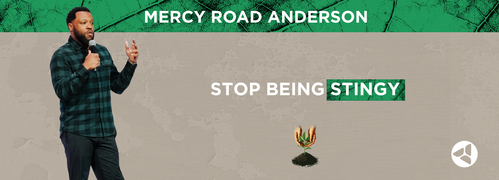
What does it mean to live a truly generous life? Many of us have been conditioned to believe that generosity is reserved for those with overflowing bank accounts, perfect credit scores, and comfortable margins in their budgets. But what if everything we've believed about generosity is fundamentally flawed?
The truth is, generosity has nothing to do with the size of your wallet and everything to do with the posture of your heart.
The Macedonian Mystery
In 2 Corinthians 8, the Apostle Paul shares a remarkable story that turns our understanding of generosity upside down. He writes about the Macedonian churches—small house churches filled with ordinary people living in what the Bible describes as "extreme poverty." These weren't the wealthy congregations with impressive buildings and substantial endowments. These were everyday people struggling to make ends meet, facing severe trials, and living under financial pressure.
Yet something extraordinary happened.
Paul writes: "In the midst of a very severe trial, their overflowing joy and their extreme poverty welled up in rich generosity. For I testify that they gave as much as they were able, and even beyond their ability."
Read that again: beyond their ability.
These people gave more than they could afford. They gave when it made no financial sense. They gave when accountants would have told them they were crazy. And they did it with overflowing joy.
How is this possible?
Grace: The Starting Point of Generosity
The passage begins with a critical insight: "We want you to know about the grace that God has given the Macedonian churches."
There it is—the secret ingredient. Grace.
Generosity doesn't begin with giving; it begins with receiving. The Macedonians understood something profound: they had been given an undeserved gift that transformed everything. They had received grace—God's unmerited favor through Jesus Christ—and that grace fundamentally changed how they viewed everything they possessed.
When you truly grasp what you've been given—forgiveness, redemption, new life, hope, purpose—your natural response is generosity. You don't give to become generous; you receive grace until generosity becomes natural.
This is the difference between obligation and overflow. Many of us approach giving as a duty, a religious requirement we grudgingly fulfill. But the Macedonians gave from a place of joy because they understood the magnitude of what they had received.
Think about it: How can you hold tightly to your possessions when you've been rescued from death? How can you be stingy with your time when you've been given eternal life? How can you close your hands when God opened His?
Poverty Is a Mindset, Not a Balance Sheet
Here's a revolutionary truth: poverty is not determined by your income level. Poverty is a mindset.
You can have a six-figure salary and live with a poverty mentality. You can have very little in your bank account and live with the abundance mindset of a child of the King. The difference isn't in your circumstances; it's in your perspective.
A poverty mindset says: "I don't have enough, so I can't give."
An abundance mindset says: "God has given me enough, so I can be generous."
The Macedonians lived in actual financial hardship, yet they operated from abundance. They understood that their security didn't come from their savings account but from their relationship with a God who promises to supply all their needs.
Joy in the Storm
One of the most striking phrases in this passage is "overflowing joy" in the midst of "very severe trial." The Macedonians weren't generous because life was easy. They were generous despite life being hard.
This reveals another crucial truth: generosity flows from joy, not from abundance.
We often think, "I'll be more generous when things calm down, when I get that promotion, when I have more margin." But that day rarely comes. There's always another expense, another crisis, another reason to hold back.
The Macedonians teach us that joy—and the generosity that flows from it—isn't dependent on our circumstances. It's rooted in our relationship with God. When you know that God is your anchor in the storm, you can have joy even when the waves are crashing. And from that joy comes a freedom to give that defies logic.
Surrender Before Service
Perhaps the most powerful verse in this passage is often overlooked: "They gave themselves first of all to the Lord, and then by the will of God also to us."
Notice the order: first to the Lord.
Before they gave a single dollar, they gave themselves. They surrendered their lives, their plans, their futures to God. And out of that surrender came radical generosity.
This is where many of us get stuck. We want to give God our money without giving Him our hearts. We want to serve without surrendering. But generosity isn't about what leaves your hand; it's about who rules your heart.
When you give yourself fully to God—your time, your attention, your dreams, your fears—He begins to speak to you about how to steward everything He's entrusted to you. You start to see your resources not as yours to hoard but as His to deploy for kingdom purposes.
Beyond Ability
The Macedonians gave "beyond their ability." This phrase should stop us in our tracks. How do you give beyond what you're able to give?
You give by faith.
You give believing that God's math is different from your accountant's math. You give trusting that when you honor God with your resources, He will make a way. You give knowing that you serve a God who multiplies loaves and fishes, who provides manna in the wilderness, who promises that as you seek first His kingdom, all these things will be added to you.
Giving beyond your ability isn't reckless; it's faithful. It's saying, "God, I trust You more than I trust my budget spreadsheet."
The Invitation
So what does this mean for you today?
It means that whatever excuse you've been using for not living generously—not enough money, not enough time, not enough stability—isn't valid. The Macedonians had less than you, faced more trials than you, and yet gave more generously than most of us ever will.
It means that before you can give generously, you need to receive grace deeply. Spend time reflecting on what God has done for you. Meditate on the cross. Remember where you were and where God has brought you. Let that grace transform your heart until generosity becomes your natural response.
It means that joy, not abundance, is the fuel for generosity. Stop waiting for perfect circumstances. Find joy in God today, in this moment, in this trial, and let that joy overflow into generous living.
It means surrendering your life to God before you try to serve Him. Give Him your heart, your plans, your future. Let Him rule every area of your life. Then watch as He directs your generosity in ways that bring life to you and others.
Breaking Free from Stinginess
The enemy wants to keep you stingy. He wants you focused on scarcity instead of abundance. He wants you paralyzed by fear instead of propelled by faith. He wants you to believe that you don't have enough when the truth is that you serve a God who is more than enough.
It's time to break free.
Stop being stingy with your time, your talents, your resources, your heart. Stop waiting for the perfect moment to start living generously. Stop believing the lie that you don't have anything to offer.
You are a child of the King. You have been given grace upon grace. You have been set free—not just from your past, but to a generous future.
The question isn't whether you have enough to be generous. The question is: will you allow the grace you've received to transform your heart into one that gives freely, joyfully, and beyond ability?
The Macedonians show us it's possible. Their example calls us higher. Their generosity challenges our excuses.
Today, will you choose to live a generous life?
The truth is, generosity has nothing to do with the size of your wallet and everything to do with the posture of your heart.
The Macedonian Mystery
In 2 Corinthians 8, the Apostle Paul shares a remarkable story that turns our understanding of generosity upside down. He writes about the Macedonian churches—small house churches filled with ordinary people living in what the Bible describes as "extreme poverty." These weren't the wealthy congregations with impressive buildings and substantial endowments. These were everyday people struggling to make ends meet, facing severe trials, and living under financial pressure.
Yet something extraordinary happened.
Paul writes: "In the midst of a very severe trial, their overflowing joy and their extreme poverty welled up in rich generosity. For I testify that they gave as much as they were able, and even beyond their ability."
Read that again: beyond their ability.
These people gave more than they could afford. They gave when it made no financial sense. They gave when accountants would have told them they were crazy. And they did it with overflowing joy.
How is this possible?
Grace: The Starting Point of Generosity
The passage begins with a critical insight: "We want you to know about the grace that God has given the Macedonian churches."
There it is—the secret ingredient. Grace.
Generosity doesn't begin with giving; it begins with receiving. The Macedonians understood something profound: they had been given an undeserved gift that transformed everything. They had received grace—God's unmerited favor through Jesus Christ—and that grace fundamentally changed how they viewed everything they possessed.
When you truly grasp what you've been given—forgiveness, redemption, new life, hope, purpose—your natural response is generosity. You don't give to become generous; you receive grace until generosity becomes natural.
This is the difference between obligation and overflow. Many of us approach giving as a duty, a religious requirement we grudgingly fulfill. But the Macedonians gave from a place of joy because they understood the magnitude of what they had received.
Think about it: How can you hold tightly to your possessions when you've been rescued from death? How can you be stingy with your time when you've been given eternal life? How can you close your hands when God opened His?
Poverty Is a Mindset, Not a Balance Sheet
Here's a revolutionary truth: poverty is not determined by your income level. Poverty is a mindset.
You can have a six-figure salary and live with a poverty mentality. You can have very little in your bank account and live with the abundance mindset of a child of the King. The difference isn't in your circumstances; it's in your perspective.
A poverty mindset says: "I don't have enough, so I can't give."
An abundance mindset says: "God has given me enough, so I can be generous."
The Macedonians lived in actual financial hardship, yet they operated from abundance. They understood that their security didn't come from their savings account but from their relationship with a God who promises to supply all their needs.
Joy in the Storm
One of the most striking phrases in this passage is "overflowing joy" in the midst of "very severe trial." The Macedonians weren't generous because life was easy. They were generous despite life being hard.
This reveals another crucial truth: generosity flows from joy, not from abundance.
We often think, "I'll be more generous when things calm down, when I get that promotion, when I have more margin." But that day rarely comes. There's always another expense, another crisis, another reason to hold back.
The Macedonians teach us that joy—and the generosity that flows from it—isn't dependent on our circumstances. It's rooted in our relationship with God. When you know that God is your anchor in the storm, you can have joy even when the waves are crashing. And from that joy comes a freedom to give that defies logic.
Surrender Before Service
Perhaps the most powerful verse in this passage is often overlooked: "They gave themselves first of all to the Lord, and then by the will of God also to us."
Notice the order: first to the Lord.
Before they gave a single dollar, they gave themselves. They surrendered their lives, their plans, their futures to God. And out of that surrender came radical generosity.
This is where many of us get stuck. We want to give God our money without giving Him our hearts. We want to serve without surrendering. But generosity isn't about what leaves your hand; it's about who rules your heart.
When you give yourself fully to God—your time, your attention, your dreams, your fears—He begins to speak to you about how to steward everything He's entrusted to you. You start to see your resources not as yours to hoard but as His to deploy for kingdom purposes.
Beyond Ability
The Macedonians gave "beyond their ability." This phrase should stop us in our tracks. How do you give beyond what you're able to give?
You give by faith.
You give believing that God's math is different from your accountant's math. You give trusting that when you honor God with your resources, He will make a way. You give knowing that you serve a God who multiplies loaves and fishes, who provides manna in the wilderness, who promises that as you seek first His kingdom, all these things will be added to you.
Giving beyond your ability isn't reckless; it's faithful. It's saying, "God, I trust You more than I trust my budget spreadsheet."
The Invitation
So what does this mean for you today?
It means that whatever excuse you've been using for not living generously—not enough money, not enough time, not enough stability—isn't valid. The Macedonians had less than you, faced more trials than you, and yet gave more generously than most of us ever will.
It means that before you can give generously, you need to receive grace deeply. Spend time reflecting on what God has done for you. Meditate on the cross. Remember where you were and where God has brought you. Let that grace transform your heart until generosity becomes your natural response.
It means that joy, not abundance, is the fuel for generosity. Stop waiting for perfect circumstances. Find joy in God today, in this moment, in this trial, and let that joy overflow into generous living.
It means surrendering your life to God before you try to serve Him. Give Him your heart, your plans, your future. Let Him rule every area of your life. Then watch as He directs your generosity in ways that bring life to you and others.
Breaking Free from Stinginess
The enemy wants to keep you stingy. He wants you focused on scarcity instead of abundance. He wants you paralyzed by fear instead of propelled by faith. He wants you to believe that you don't have enough when the truth is that you serve a God who is more than enough.
It's time to break free.
Stop being stingy with your time, your talents, your resources, your heart. Stop waiting for the perfect moment to start living generously. Stop believing the lie that you don't have anything to offer.
You are a child of the King. You have been given grace upon grace. You have been set free—not just from your past, but to a generous future.
The question isn't whether you have enough to be generous. The question is: will you allow the grace you've received to transform your heart into one that gives freely, joyfully, and beyond ability?
The Macedonians show us it's possible. Their example calls us higher. Their generosity challenges our excuses.
Today, will you choose to live a generous life?
Posted in Generous Life
Recent
Archive
2026
August
September
No Comments